
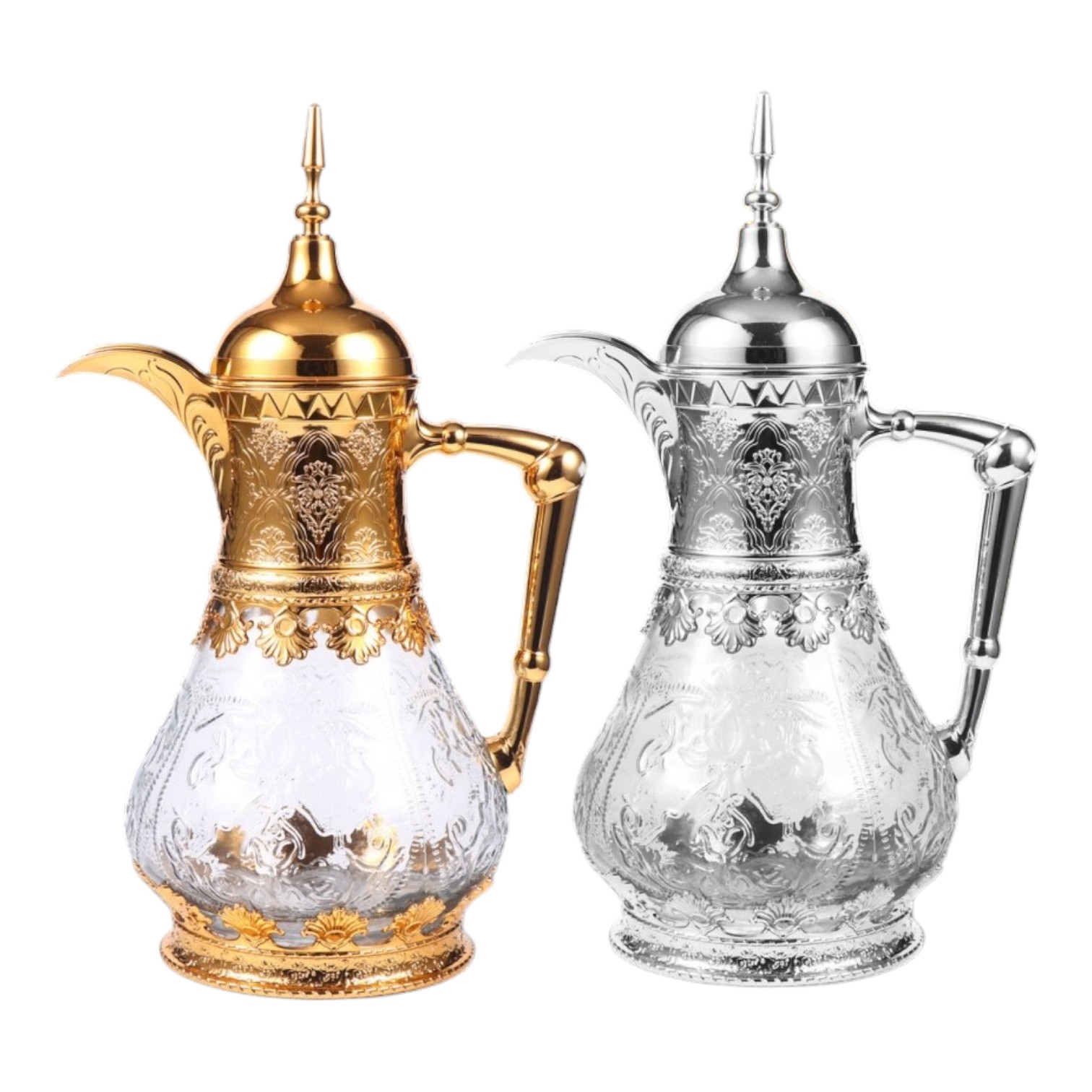
Water Pitcher
Product Specifications
Product Details
Water Pitcher
A quiet companion to the daily ritual of hydration. More than just a vessel, the water pitcher stands at the intersection of utility and grace, silently shaping how we pour, serve, and pause for a moment of refreshment.
The Anatomy of a Simple Object
A water pitcher is defined by a few essential elements: a wide body to hold generous volume, a spout designed for a clean, drip-free pour, and a handle that balances the weight in the hand. The proportions are rarely accidental. The curve of the lip, the angle of the grip, the distribution of mass from base to rim — every detail is a conversation between the maker and the user.
Materials range from crystalline glass that reveals the gentle sway of water within, to matte stoneware that holds the coolness of the earth. Each material transforms the act of pouring: glass offers a visual lightness, ceramic imparts a sense of ritual gravity, and stainless steel brings a utilitarian, unbreakable poise.
"There is a particular quietness to a well-made pitcher. It does not demand attention, yet it holds the table together."
A Gesture Embedded in Memory
The act of pouring from a pitcher carries a subtle choreography. There is the initial tilt, the moment the water begins its arc, the soft sound it makes hitting a glass or the surface of a goblet. It is a brief performance repeated countless times — at breakfast tables, in meeting rooms, on bedside nightstands. The pitcher becomes an extension of the arm, a tool that privileges slowness over speed.
In many cultures, the water pitcher is a symbol of hospitality. Placing it on the table signals that guests are welcome to linger. It is not merely about quenching thirst; it is about offering comfort without words. A full pitcher at the center of a meal represents abundance, while an empty one is a gentle reminder to replenish.
Elevating the Ordinary
What separates a forgettable container from a cherished object is often the quality of thought invested in its design. A subtly flared rim prevents drips from running down the body. A handle with a flattened thumb rest distributes pressure when the pitcher is full. The base, slightly wider than the neck, ensures stability on a crowded table. These are not grand innovations; they are small, deliberate acts of care.
Contemporary designers continue to reinterpret the water pitcher, exploring asymmetrical forms, integrated filtration systems, and sustainably sourced materials. Yet the most enduring designs remain those that honor the pitcher's core purpose: to hold and to pour, with ease and with dignity.
Keeping the Pitcher Alive
A well-maintained water pitcher can last for decades, aging gracefully rather than wearing out. Glass pitchers benefit from gentle hand-washing to avoid clouding, while ceramic ones prefer mild soap and a soft sponge to preserve the glaze. Stainless steel demands little more than a rinse and the occasional polish to remove water spots.
The greatest threat to any pitcher is not daily use, but neglect. Water left standing for too long encourages mineral deposits and, in warmer climates, the growth of unwanted organisms. The simplest practice is the most effective: use it, empty it, rinse it, and let it air dry thoroughly. In return, the pitcher will serve faithfully, silent and steady.
The water pitcher sits at the quiet edge of our daily lives. It asks for nothing, yet it shapes the rhythm of our tables and the generosity of our gatherings. Next time you lift it, notice the weight, the balance, the cool touch of the material — and recognize the craftsmanship that makes such a simple act feel so complete.
Related Products
No related products found.