
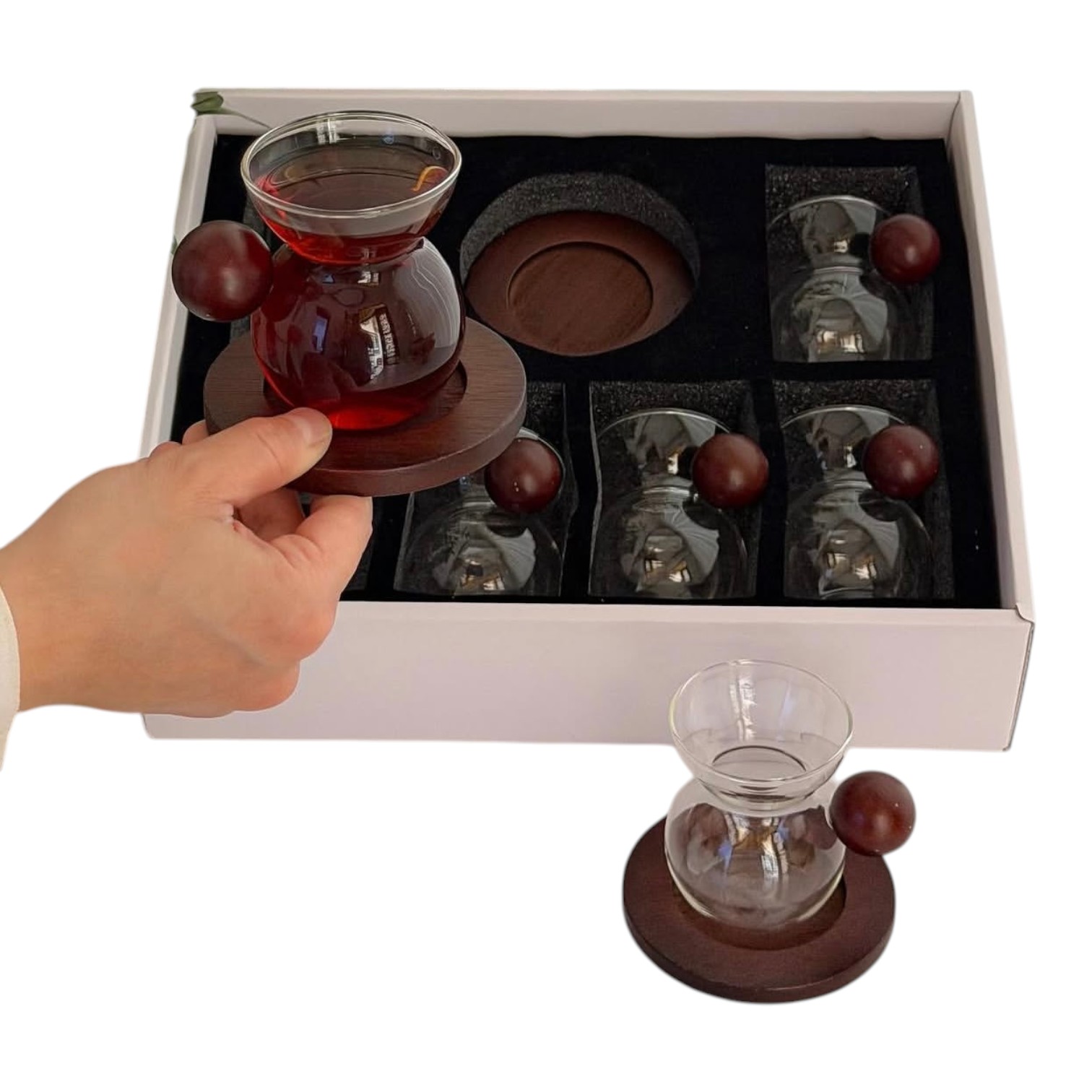
Product Details
Ceramics
From ancient pottery to contemporary sculpture, ceramics have never been absent in human civilization. It can be both a daily container and a spiritual sustenance. Here, we will rediscover this ancient yet ever-new art from four dimensions: craftsmanship, material, history, and aesthetics.
Craftsmanship: From Clay to Vessel
The process of making ceramics is essentially a dialogue with natural materials. Selecting clay, kneading, wheel-throwing, trimming, bisque firing, glazing, and glaze firing—every step requires patience and precision. During hand wheel-throwing, the rotating wheel and the pressure of both hands jointly shape the form of the vessel; the slightest carelessness may ruin all previous efforts. The glazing process is more like an impromptu creation—the thickness of the glaze and the trajectory of the flow will produce unpredictable chemical changes in the kiln fire.
"The process of making pottery is learning to accept imperfection. The surprises and regrets brought by kiln changes are all part of the work."
Modern ceramics, based on traditional techniques, incorporate more experimental methods. For example, the rapid cooling of raku firing, the carbon penetration of smoke firing, and the layering of various slips all make the surface texture of ceramics richer. These expansions of craftsmanship allow ceramics to be not just smooth vessels, but also to possess rough, mottled, or even metallic textures.
Material: The Dialogue Between Pottery and Porcelain
The term "ceramics" actually includes two different categories: pottery and porcelain. Pottery is usually fired from relatively coarse clay at lower temperatures, with a higher pore rate in the body, presenting a simple and warm temperament. Porcelain, on the other hand, uses kaolin, quartz, feldspar, and other materials as raw materials, fired at high temperatures, with a dense body, a crisp sound when tapped, and a smooth surface like jade. Neither is superior; they just have different personalities. Pottery is more suitable for expressing the primitive sense of the earth, while porcelain excels at conveying refinement and transparency.
In terms of material selection, more and more ceramic artists are beginning to cross boundaries and integrate. For example, mixing a certain proportion of grog or匣钵 powder into porcelain clay to increase refractoriness and texture; or applying porcelain glaze to the surface of pottery to create a strong visual contrast. This continuous exploration of materials pushes the boundaries of ceramic language outward.
History: A Civilization Written in Fire
The history of ceramics is almost as long as human civilization. From the painted pottery jars of the Neolithic Age, to the peak of porcelain in the Tang and Song dynasties, to contemporary conceptual ceramics, every era has left its unique mark on clay. Chinese celadon, white porcelain, and blue and white porcelain have influenced the ceramic aesthetics of the entire world. Japanese tea ceremony pottery integrates Zen into daily utensils, while European Meissen porcelain represents another pursuit of ultimate craftsmanship.
"An ancient piece of pottery is worth more than thousands of words in historical books. It records how people lived, thought, and expressed beauty at that time."
These historical relics are not only witnesses to craftsmanship but also physical evidence of cultural exchange. In the shipwrecks on the Maritime Silk Road, tens of thousands of pieces of porcelain slept for hundreds of years before reappearing. They were once one of the most precious commodities in trade between East and West. Today, these artifacts are displayed in museums, continuing to tell stories that span time and space.
Aesthetics: The Spiritual Dimension of Vessels
The beauty of ceramics is often reflected in the balance between relaxation and restraint. A good work may not have an ostentatious form, but its proportions, lines, and glaze colors are just right. In Eastern aesthetics, this realm is called "the beauty of use"—vessels develop an emotional connection with users through long-term use, and the traces left by time become a deeper aesthetic value. Yan Muneyoshi, a core figure in the Japanese Mingei movement, once proposed that true beauty lies in daily utensils, not in deliberately crafted artworks.
Contemporary ceramic aesthetics are more diverse. Some artists use ceramics as a medium for pure sculpture, completely detached from practical functions; others return to the essence of vessels, injecting contemporary design language into the forms of cups, bowls, and bottles. Regardless of the direction, ceramics always maintain a texture that is closely connected to the earth, hands, and time—something that no industrial material can replace.
Related Products
No related products found.